
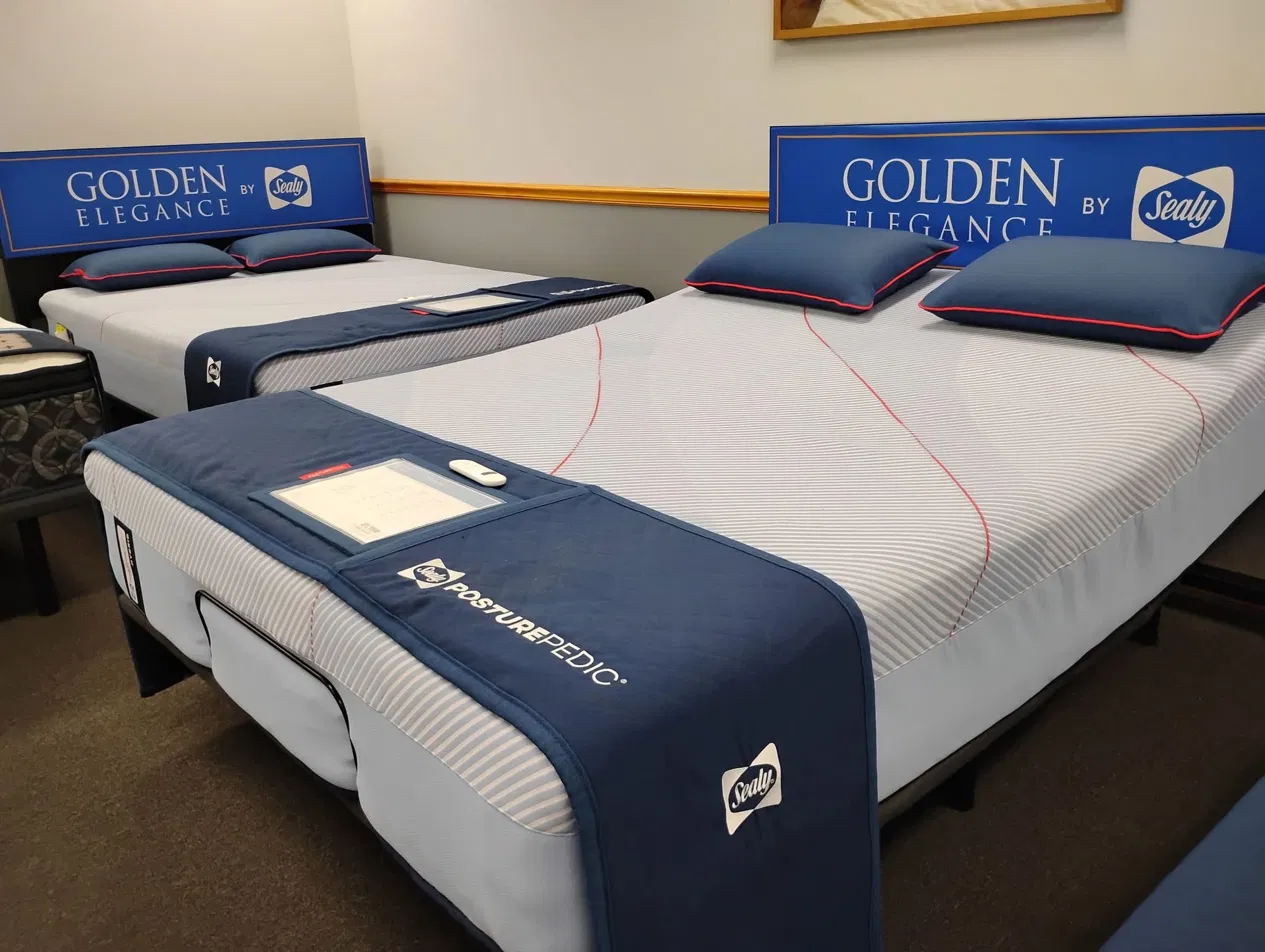
When to replace a mattress: Six signs it is time
Most mattresses last seven to ten years, but knowing when to replace a mattress depends on more than its age. Visible sagging, poor support, increased movement and waking up uncomfortable can all indicate that your mattress is wearing out. If you regularly sleep better somewhere other than your own bed, it may be time to consider a replacement.
A well-made mattress on a supportive foundation can last longer than ten years, while a lower-quality mattress may begin showing signs of wear much sooner.
Before spending money on a new mattress, look for these six warning signs and check two things that could affect your comfort. Understanding the difference between a worn-out mattress and a problem with your bed frame can help you make a better decision.
What are the signs your mattress is worn out?
1. You sleep better away from home
Have you ever spent a night in a hotel or at a relative’s house and noticed that you woke up feeling better?
If your back feels better after sleeping on another mattress, your current bed may no longer provide the support your body needs.
Pay attention to how you feel when you wake up. Morning stiffness, soreness in your hips or shoulders and frequent changes in sleeping position can indicate that your mattress is no longer comfortable.
A mattress is not necessarily the cause of every ache or pain, but consistently sleeping better on another bed is a reason to inspect yours.
2. Your mattress has a visible dip or a ridge down the middle
A mattress should provide relatively even support across its sleeping surface. As materials wear, foam can compress and springs can lose some of their ability to support your body.
Try laying a straightedge, such as a broom handle, across your mattress. Look for noticeable gaps beneath it where you normally sleep.
Couples may notice a raised ridge down the center of the bed, with lower areas on either side where each person sleeps.
If the mattress has developed permanent indentations or your body sinks noticeably farther than it once did, the support materials may be wearing out.
3. You feel every movement your partner makes
Does your partner turning over wake you during the night?
Some mattresses naturally transfer more movement than others. However, if you have recently started noticing every movement across the bed, your mattress may no longer isolate motion as effectively.
Traditional innerspring mattresses often transfer more movement than mattresses with individually wrapped coils or certain foam constructions.
If motion transfer is affecting your sleep, explore the mattress collection at Nothing But Beds, including Beautyrest models with pocketed coil technology designed to help reduce movement between sleepers.
4. Your mattress makes unusual noises
Creaking, popping or squeaking noises may indicate that your mattress or its foundation needs attention.
In an older innerspring mattress, worn coils can sometimes make noise when you shift positions. However, sounds may also come from a loose bed frame, damaged box spring or worn connections.
Foam mattresses generally do not produce the same mechanical noises as traditional innerspring models.
Before replacing your mattress, check the foundation and frame to see whether tightening or repairing them resolves the problem.
5. Your allergies seem worse in the morning
Over time, mattresses can accumulate dust mites, skin cells and other allergens.
If you regularly wake up with congestion, sneezing or irritated eyes, your sleeping environment may be contributing to those symptoms.
An aging mattress can be one possible source, although pillows, bedding, pets and indoor air quality may also play a role.
Use a washable mattress protector, clean bedding regularly and follow the manufacturer’s mattress care instructions.
If your symptoms continue, consider other potential causes before assuming that replacing the mattress will resolve them.
6. Your mattress is more than ten years old
If you cannot remember when you purchased your mattress, it is worth taking a closer look at its condition.
Most mattresses are expected to last approximately seven to ten years, depending on their materials, construction and use.
The change in comfort often happens gradually. You may adjust your sleeping position or accept morning stiffness without realizing that your mattress no longer feels the way it did when it was new.
Ten years is a reasonable point to evaluate your mattress, even if there are no obvious signs of damage.
What should you check before replacing your mattress?
Before buying a new mattress, inspect your foundation and think about whether your sleeping needs have changed.
Check your box spring or bed frame
A mattress needs a stable foundation to provide proper support.
A sagging box spring, damaged frame or slats spaced farther apart than the mattress manufacturer allows can affect its performance and shorten its useful life.
Some manufacturers require slats to be no more than a certain distance apart, so check the warranty and foundation specifications for your mattress.
If the foundation is the problem, replacing or repairing it may improve your sleeping surface. If the mattress itself has permanent sagging or worn materials, a new foundation will not restore them.
Consider how your sleeping needs have changed
The mattress you purchased several years ago may no longer match your needs.
Weight changes, different sleeping positions, mobility concerns and new pressure points can all influence which mattress feels comfortable.
For example, side sleepers often prefer cushioning around their shoulders and hips, while back and stomach sleepers may need a firmer surface to maintain comfortable alignment.
If you have developed discomfort or changed your sleeping habits, explain those concerns when comparing mattresses.
You can also read how to choose a mattress based on the six performance factors that matter to better understand firmness, pressure relief, motion isolation and other important features.
How long should a new mattress last?
Most new mattresses last approximately seven to ten years. Higher-quality construction, proper maintenance and a supportive foundation can help extend that lifespan.
However, no mattress has a guaranteed lifespan. Daily use, sleeper weight, materials and care practices all influence how long it remains comfortable.
At Nothing But Beds, shoppers can compare Beautyrest, Serta, Sealy, Casper and other mattress models with different support systems and comfort features.
To help your mattress last longer:
- Rotate it head to foot when recommended by the manufacturer.
- Use a foundation that meets the mattress warranty requirements.
- Keep a washable mattress protector on the bed.
- Clean spills promptly according to the manufacturer’s instructions.
- Inspect your bed frame periodically for loose connections or damage.
Not every mattress is designed to be flipped or rotated, so follow the care instructions for your specific model.
What happens when you visit Nothing But Beds?
Shopping for a mattress should give you the opportunity to experience how different beds actually feel.
At Nothing But Beds, you can lie down on mattresses, compare firmness levels and discuss your sleeping preferences before making a purchase.
The family-owned business has served the region since 2001, with showrooms in Murphy, North Carolina and Andrews, North Carolina.
Instead of choosing based only on a photograph or product description, you can compare mattresses in person.
Take time to test different comfort levels. Lie on each mattress in your usual sleeping position and pay attention to how it supports your shoulders, hips and lower back.
You can also ask about adjustable bed bases, which allow you to raise or lower sections of the mattress for reading, relaxing or finding a more comfortable resting position.
The Nothing But Beds mattress collection includes memory foam, hybrid and innerspring options, along with adjustable bed solutions.
Can Nothing But Beds deliver your new mattress?
Nothing But Beds offers local mattress delivery, helping customers avoid the difficulty of transporting a large mattress themselves.
The company serves communities throughout western North Carolina and the surrounding north Georgia region.
Delivery availability depends on your address and the mattress you purchase. The business also advertises mattress pickup options.
Ask about delivery scheduling, setup, old mattress removal and any applicable charges before completing your purchase.
You can contact Nothing But Beds to discuss delivery availability for your area.
Why is fall a good time to replace a mattress?
Fall is a practical time to inspect your mattresses, especially if you expect overnight guests during Thanksgiving or the holiday season.
The guest room mattress is often one of the oldest beds in the house. Because it is used less frequently, sagging or declining comfort may go unnoticed.
Before guests arrive, check whether the mattress provides even support and whether the bed frame is in good condition.
If you plan to replace a mattress before holiday visitors arrive, shopping in September or October can provide additional time to compare models and arrange delivery.
However, if your everyday mattress is causing discomfort or interrupting your sleep, there is no reason to wait until fall.
Where can you shop for a mattress in western North Carolina and north Georgia?
Nothing But Beds serves customers throughout Cherokee and Clay counties in North Carolina and nearby communities in north Georgia, including Fannin and Towns counties.
Whether you are shopping for a mattress in Murphy, Andrews, Hayesville, Blue Ridge or Hiawassee, you can visit one of the company’s two North Carolina showrooms to compare your options.
Murphy, NC
Nothing But Beds mattress store in Murphy, NC
1315 US Highway 64
Murphy, NC 28906
Phone: (828) 835-3346
Andrews, NC
Nothing But Beds mattress store in Andrews, NC
13860 US Highway 19
Andrews, NC 28901
Phone: (828) 321-2835
Customers from Hayesville, North Carolina, and Blue Ridge and Hiawassee, Georgia, can contact either location for assistance with mattress selection and delivery availability.
Find out whether it is time for a new mattress
If your mattress has visible sagging, causes frequent discomfort or no longer provides the support you remember, it may be time to replace it.
Before making that decision, check your foundation, consider whether your sleeping needs have changed and compare a few mattress styles.
At Nothing But Beds, you can test mattresses in person and speak with a local team that understands the importance of choosing the right bed for your comfort and budget.
Browse mattresses at Nothing But Beds or visit our Murphy and Andrews locations to find a mattress that fits your needs.
Frequently asked questions about mattress replacement
How often should you replace a mattress?
Most mattresses should be evaluated for replacement after seven to ten years. Replace yours sooner if it develops significant sagging, loses support or becomes uncomfortable. A well-maintained, high-quality mattress may last longer.
How do I know if my mattress is causing back pain?
If you regularly wake up with stiffness or back discomfort that improves after getting out of bed, or you sleep better on another mattress, your mattress may be contributing to the problem. Back pain can have several causes, so persistent symptoms should be evaluated by a healthcare professional.
Can I put a new mattress on an old box spring?
Yes, provided the existing box spring is in good condition and meets the new mattress manufacturer’s support requirements. A damaged or incompatible foundation can contribute to premature sagging and may affect warranty coverage.
Is a mattress still good after ten years?
Possibly. A mattress that is more than ten years old may still provide adequate comfort and support, depending on its construction, maintenance and use. Inspect it for sagging, uneven support and changes in comfort before deciding whether to replace it.
Does Nothing But Beds haul away old mattresses?
Nothing But Beds advertises mattress delivery and pickup services. Contact the store to confirm whether old mattress and box spring removal is available for your address and whether any conditions or fees apply.
Where are Nothing But Beds mattress stores located?
Nothing But Beds has two physical showroom locations in Murphy and Andrews, North Carolina. The business also serves customers from surrounding communities, including Hayesville, North Carolina, and Blue Ridge and Hiawassee, Georgia. Visit the Nothing But Beds contact page for store addresses, hours and telephone numbers.